 Canvas guide
Canvas sizes are a little different from photo and frame sizes. They follow the stretcher bars a canvas is built on, and some print sizes don't exist as stock bars at all. Picking a size that matches both your image and a standard frame saves money and a lot of cropping. Here are the common canvas sizes, what fits each one, and how to set up a file so nothing important wraps around the edge.
Quick answer
The short answer
The most common canvas sizes in the US are 8×10, 11×14, 12×16, 16×20, 18×24, 24×30, 24×36, 30×40 and 36×48 inches. 16×20 and 18×24 are the most popular for a single piece over a desk or dresser. 24×36 and up suit a sofa or a long wall.
Match the size to your image's shape: phone photos are 4:3 (12×16, 18×24), most camera photos are 3:2 (8×12, 16×24, 24×36), and paintings vary.
01
Standard canvas sizes chart
| Size (in) | Shape | Fits images that are | Good for |
|---|---|---|---|
| 8×10 | 4:5 | Cropped portraits | Shelves, small walls, gifts |
| 11×14 | Close to 4:5 | Portraits, slight crop | Desks, gallery walls |
| 12×16 | 3:4 | Phone photos, no crop | Hallways, side tables |
| 16×20 | 4:5 | Portraits, square-ish art | Bedrooms, over a desk |
| 18×24 | 3:4 | Phone photos, no crop | Living rooms, entryways |
| 16×24 | 2:3 | Camera photos, no crop | Landscapes |
| 20×24 | 5:6 | Square-ish paintings | Statement piece in a small room |
| 24×30 | 4:5 | Portraits, paintings | Over a console or bed |
| 24×36 | 2:3 | Camera photos, no crop | Over a sofa |
| 30×40 / 36×48 | 3:4 | Phone photos, large art | Big walls, lofts, offices |
Square canvases (12×12, 20×20, 24×24, 30×30) are standard too, and they work well for album art, Instagram crops and abstract work.
02
Canvas depth and the wrap
If you plan to have your canvas stretched by a framer, there are two common depths, and the depth changes how much of your image disappears around the sides.
- Standard (about ¾ inch): usually framed, or hung where the edge won't be seen.
- Gallery (about 1½ inch): deep enough to hang without a frame. The image or a solid color wraps around the sides.
For a gallery wrap, your file needs extra image on every side to cover the edge plus a little more to fold around the back. On a 1½-inch canvas that's roughly 2 to 2½ inches per side. If the edge of your image matters, there are two common fixes:
- Mirror wrap: the outer strip of the image is reflected onto the sides, so the front shows the whole picture.
- Color wrap: the sides are a solid color, usually black or white, and the full image sits on the front.
03
How big can you go from your file?
Canvas texture hides a little softness, so canvas is more forgiving than smooth paper. 150 to 200 PPI at the final size looks good on a wall.
| Canvas size | Pixels for 150 PPI | Pixels for 200 PPI |
|---|---|---|
| 12×16 | 1800×2400 | 2400×3200 |
| 16×20 | 2400×3000 | 3200×4000 |
| 18×24 | 2700×3600 | 3600×4800 |
| 24×36 | 3600×5400 | 4800×7200 |
A recent iPhone photo (4032×3024 pixels or more) covers 18×24 comfortably. For anything bigger, send us the original file and we'll tell you honestly how it will look.
04
Picking the right size for the wall
- Over furniture: leave 8 to 10 inches between the top of the sofa or console and the bottom of the canvas.
- Height: center the canvas about 57 to 60 inches from the floor.
- Test it first: cut a piece of paper or cardboard to size and tape it up. Canvas almost always looks smaller on the wall than you expect.
05
Canvas printing at IMPRESO
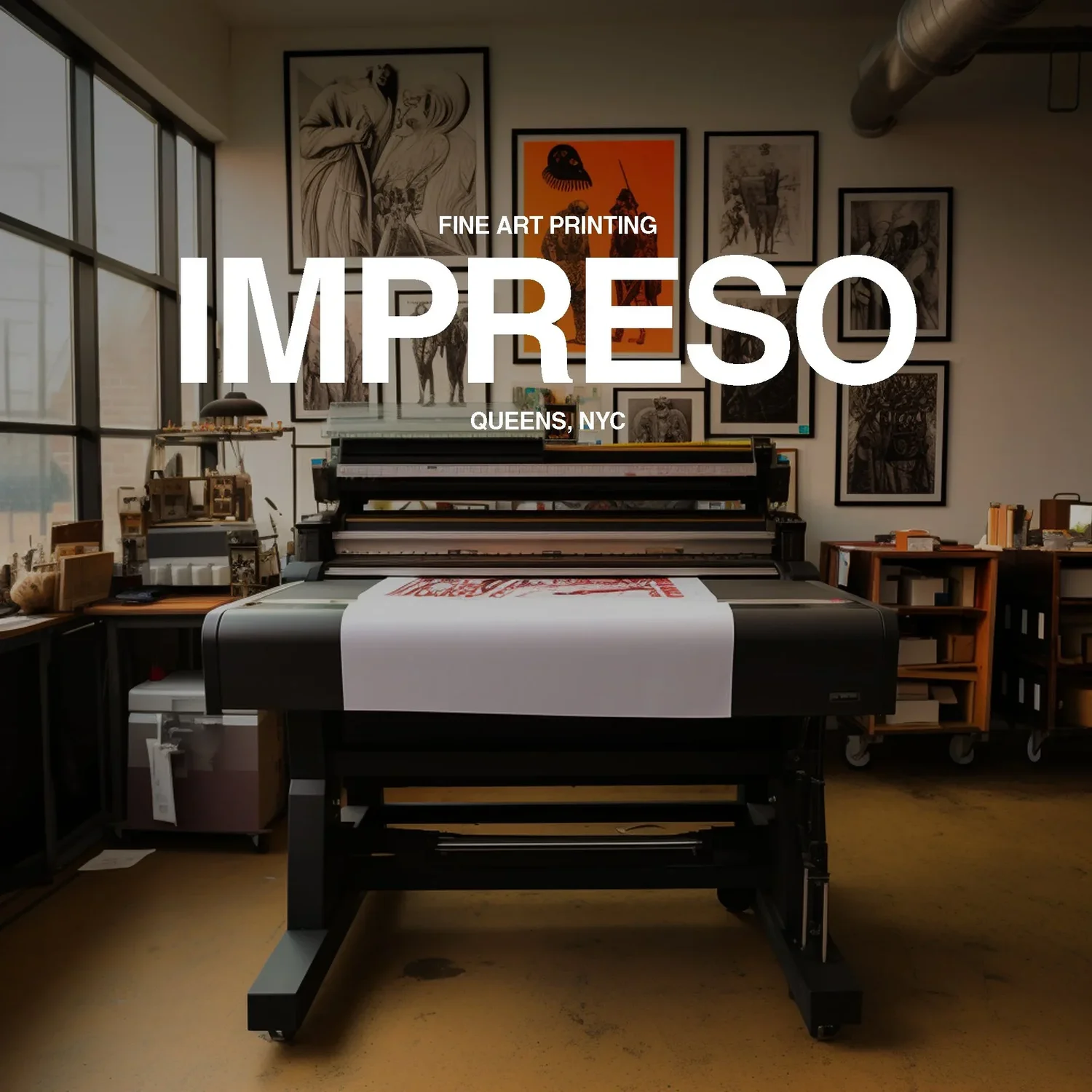
We print canvas as giclée on our Epson 24-inch printer with UltraChrome HDR pigment inks, and every piece is checked by hand in our Ridgewood, Queens studio. Canvas can be up to 24 inches wide and comes rolled, ready for your framer or a canvas stretcher. We don’t stretch canvas in the studio, so if your piece will be stretched or gallery-wrapped, tell us and we’ll plan the extra border with you.
Canvas is priced by quote because size, quantity and finishing all change it. Send your image, the size and the finish you want, and we'll reply with a price and timeline.
Get a canvas quote
Tell us the size and how many, and whether it will be stretched later so we can plan the border. We'll check your file for free before quoting, and pickup in Ridgewood is free.
Request a canvas quote → See giclée printing →More guides