 Filament guide
Some prints should look like metal, satin or polished stone, not plastic. Silk PLA gets you most of the way there straight off the printer, with no paint or polish. Here's what Bambu Lab's PLA Silk+ and PLA Silk Multi-Color are, what they're good for, and where they fall short.
Quick answer
The short answer
Silk PLA is PLA with a high-gloss, satin-like sheen. Bambu describes PLA Silk+ as "Shiny Like Chrome, Smooth Like Silk." It's made for looks first: trophies, vases, ornaments and display pieces.
PLA Silk+ is Bambu's single-color silk, in 13 colors including gold, silver and rose gold. PLA Silk Multi-Color merges two silk colors in one strand, so the color shifts depending on which side of the print you're looking at.
01
What is silk PLA?
It's regular PLA blended with additives that give the surface a smooth, reflective shine. Light runs along the layers instead of scattering, which reads as a metallic or pearly finish.
The shine depends on how it's printed. Bambu says higher temperatures and lower speeds give glossier results. Bambu prints PLA Silk+ at 210–240°C (410–464°F), a little hotter than standard PLA.
02
How PLA Silk+ compares to PLA Basic
Generic silk PLA has a reputation for weak layer bonding. Bambu says Silk+ avoids the "reduced adhesion found in generic PLA Silk." In Bambu's tests, it's close to PLA Basic on bending strength, but less impact resistant.
| Bambu's test | PLA Basic | PLA Silk+ |
|---|---|---|
| Bending strength | 76 MPa | 75 MPa |
| Bending modulus (stiffness) | 2,750 MPa | 2,460 MPa |
| Impact strength | 26.6 kJ/m² | 18.5 kJ/m² |
| Breaking elongation (stretch) | 12.2% | 2.8% |
| Heat deflection temperature | 57°C (135°F) | 60°C (140°F) |
The low stretch figure matters. Silk prints snap rather than bend, so they belong on a shelf, not in a moving part.
03
How Silk Multi-Color works
Two colors run side by side in a single strand of filament. As the printer lays it down, one color faces one way and the second faces the other. Turn the finished piece and the color changes, often with a gradient where they meet.
Bambu notes the strand can twist as it feeds, which can make color transitions uneven. That's part of the charm, but it means no two prints look exactly the same. Bambu's names hint at the look: Velvet Eclipse, Gilded Rose, Blue Hawaii. For gradients that change from bottom to top instead, see multicolor and gradient PLA.
04
What silk PLA is good for
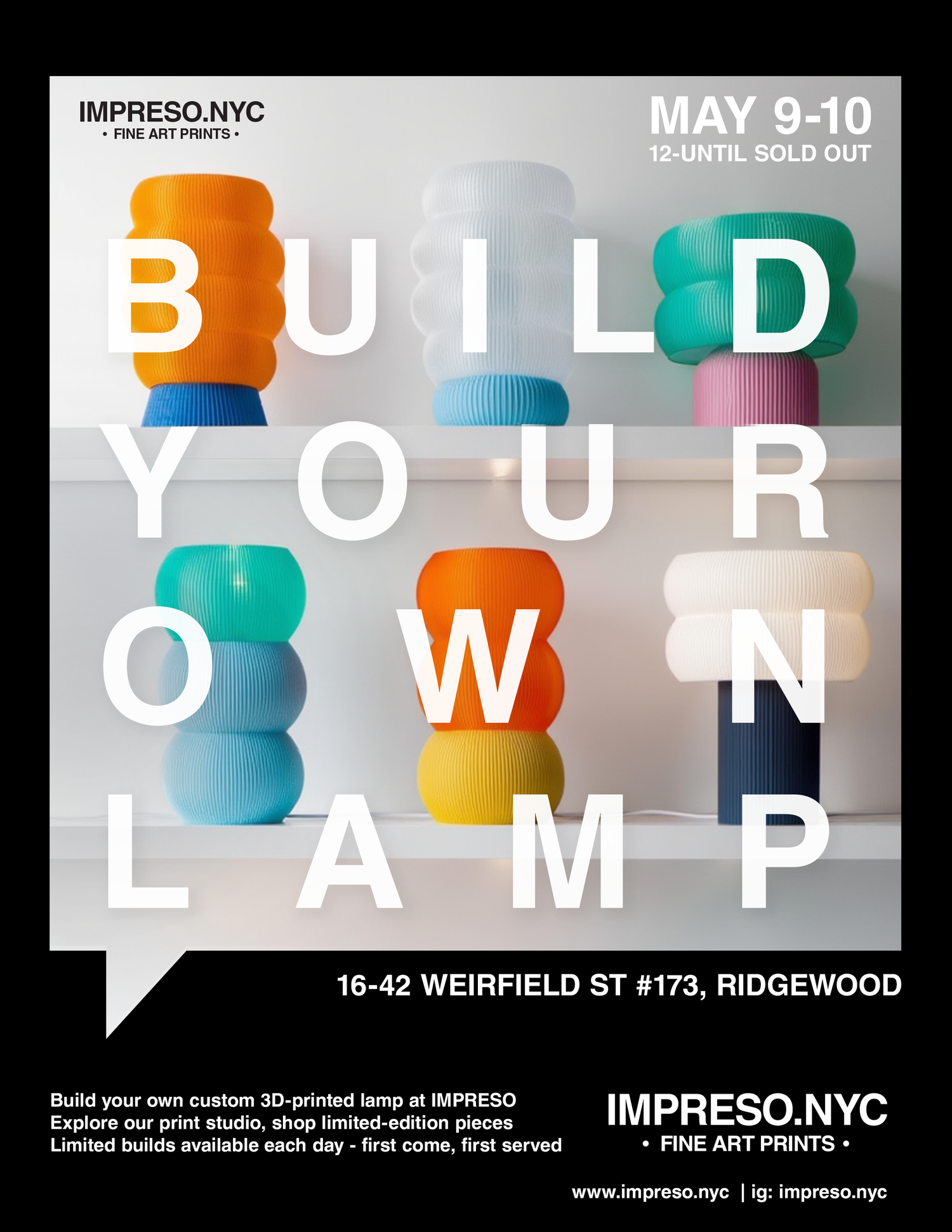
- Vases, bowls and lamp shades, especially printed with a single wall
- Trophies, awards and commemorative pieces
- Holiday ornaments and gifts
- Jewelry dishes, trinkets and decorative boxes
- Cosplay accents that should read as metal from a distance
- Brand pieces in gold, silver or a signature color
05
Limits to know
- Brittle. Skip it for clips, hinges, threads and anything that flexes.
- Shows flaws. Shine highlights surface defects, so supports leave more visible marks.
- Heat. Like all PLA, it softens with heat. Keep it out of hot cars and direct sun.
- Not quite metal. It looks metallic, not like cast metal. For a heavier, true-metal look, see metal PLA.
06
Tips for designing for silk
Smooth, flowing curves show silk at its best. Avoid steep overhangs that need supports on visible faces. For a matte contrast, pair it with PLA Matte.
07
Silk PLA at IMPRESO
We print PLA Silk+ and PLA Silk Multi-Color in-house in our Ridgewood, Queens studio. Tell us how the piece will be used and the look you're after, and we'll recommend the right material and color. Every job is quoted individually.
Start a 3D project
Send us your file, a sketch or just the idea, and how the piece will be used. We'll recommend a material and quote it.
Start a 3D project → See 3D printing →More guides