 Filament guide
ABS is a dependable engineering plastic, but large ABS parts can warp, and it flexes under load. ABS-GF adds glass fiber to fix both. Here's what Bambu Lab's ABS-GF is, what changes compared with plain ABS, and when it's worth using.
Quick answer
The short answer
ABS-GF is ABS filled with short glass fibers. In Bambu's tests it's stiffer and more heat resistant than regular ABS, with less warping and a matte finish that nearly hides layer lines.
The trade-off is toughness. Glass fiber makes parts rigid, so they absorb less impact than plain ABS.
01
What is ABS-GF?
ABS is a tough, heat-resistant plastic used in everything from LEGO bricks to car interiors. "GF" means glass fiber. Tiny chopped strands of glass are blended in, which stiffens the plastic and helps it keep its shape as it cools.
Glass is abrasive. Bambu recommends a hardened steel nozzle, with 0.6 mm as the preferred size, and says stainless nozzles aren't recommended. Like ABS, it needs an enclosed printer.
02
ABS-GF vs regular ABS
Bambu's comparison shows exactly where the fiber helps and where it costs.
| Bambu's test | ABS | ABS-GF |
|---|---|---|
| Bending modulus (stiffness, XY) | 1,880 MPa | 2,860 MPa |
| Bending strength (XY) | 62 MPa | 68 MPa |
| Bending strength (Z, between layers) | 39 MPa | 46 MPa |
| Heat deflection (0.45 MPa) | 87°C | 99°C |
| Impact strength (XY) | 39.3 kJ/m² | 14.5 kJ/m² |
| Print speed | <300 mm/s | <180 mm/s |
Stiffness rises by about half, and heat resistance climbs to 99°C (210°F). Impact strength drops to well under half. So ABS-GF is for parts that must hold shape, not parts that get dropped or hit.
03
What ABS-GF is good for
- Brackets, housings and mounts that must stay rigid
- Larger flat parts where plain ABS would warp
- Jigs, fixtures and workshop tools
- Parts near moderate heat: car interiors, appliance parts
- Functional prototypes where a clean matte finish matters
Bambu also notes improved water resistance and dimensional stability, which helps with parts that need to fit together.
04
How it looks
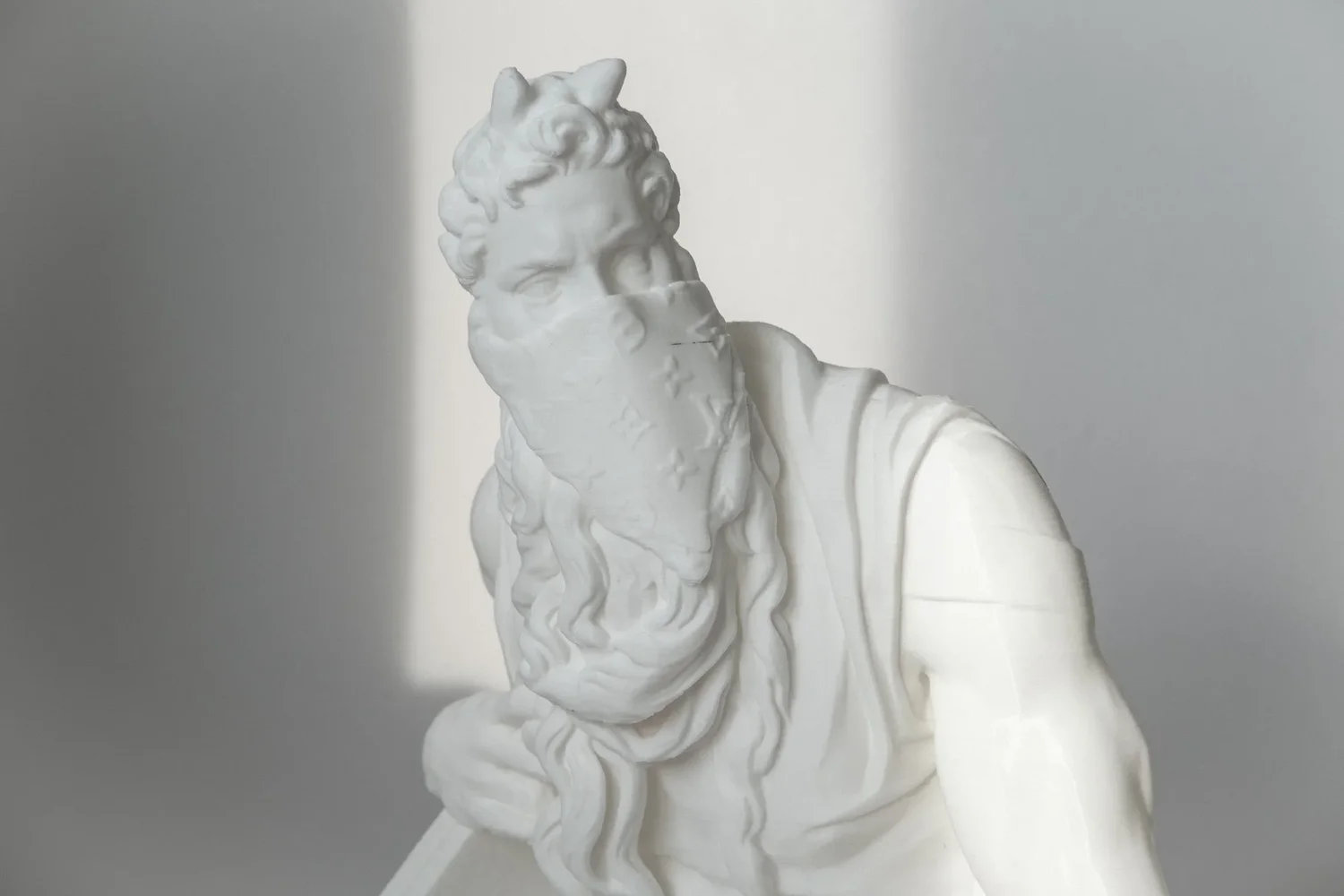
Bambu describes the finish as matte, with layer lines that are nearly invisible. That makes it a good fit for visible functional parts, like a product housing or a display mount, where plain ABS would look shiny and stepped.
05
Limits
- Brittle under impact. For parts that take knocks, plain ABS or ASA is better.
- Not for sunlight. It's still ABS underneath. For outdoor rigid parts, ASA-CF is the better pick.
- Coarser detail. A 0.6 mm nozzle softens small features and fine text.
- Slower printing. Bambu's speed limit is lower than plain ABS, which affects turnaround on big parts.
06
Designing for ABS-GF
Use fillets on inside corners, since stiff materials crack at sharp ones. Keep walls at least 1.2 mm thick to suit a wider nozzle. Avoid thin snap-fits, which need flex this material doesn't have.
07
ABS-GF at IMPRESO
We print ABS-GF in-house at our Ridgewood, Queens studio, on an enclosed printer with a hardened steel nozzle. Tell us what the part needs to hold and where it will live, and we'll recommend ABS-GF or a better fit. Every job is quoted individually.
Start a 3D project
Send us your file or a sketch, and describe the load and environment. We'll pick the material and quote it.
Start a 3D project → See 3D printing →More guides