 Filament guide
Some parts need to be light above all else. RC planes, drone parts and large wearable props get heavy fast in solid plastic. ASA Aero is a foaming filament that puffs up as it prints, cutting the weight of a part. Here's how Bambu Lab's ASA Aero works and when it makes sense.
Quick answer
The short answer
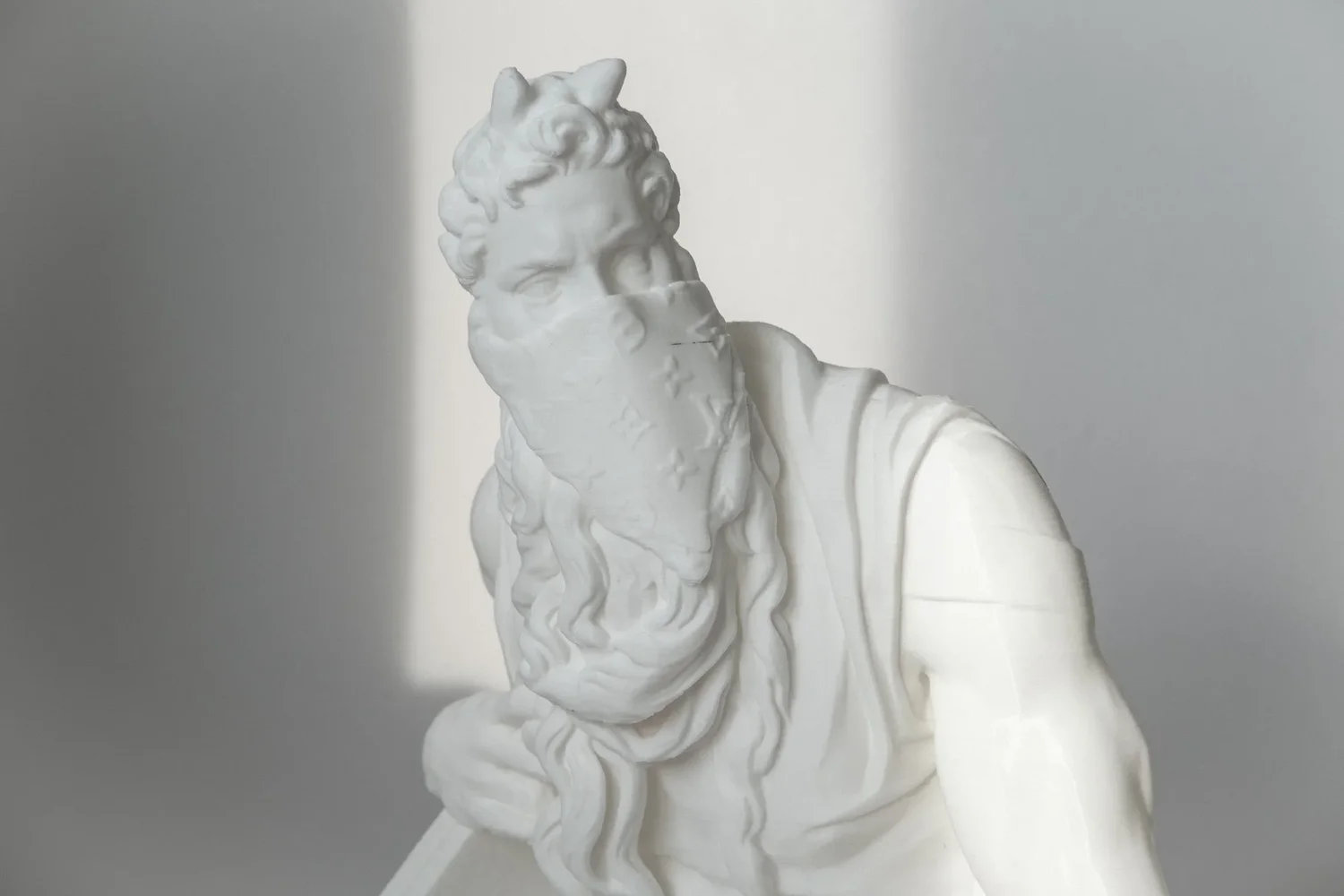
ASA Aero is a lightweight, foaming version of ASA. Tiny bubbles form in the plastic as it leaves the nozzle, so prints can weigh much less. Bambu rates prints at 50–75% of the density of regular ASA prints.
It keeps ASA's water and UV resistance, and Bambu says it's tougher than other foaming filaments. It has a matte surface that takes paint well.
01
How foaming works
The filament itself has a density of 0.99 g/cm³. As it heats in the nozzle, it expands. The hotter it prints, the more it foams and the lighter the part gets.
Bambu's tests show the range. At 220°C a print stays near 0.97 g/cm³. At 250°C it drops to about 0.61, and at 280°C to about 0.45. That control lets us tune weight against strength for each part.
02
ASA Aero vs other options
Bambu compares ASA Aero with its PLA Aero and PLA Wood.
| Bambu's test | ASA Aero | PLA Aero | PLA Wood |
|---|---|---|---|
| Impact strength (XY) | 32.0 kJ/m² | 24.5 kJ/m² | 7.9 kJ/m² |
| Layer adhesion (Z impact) | 3.4 kJ/m² | 2.5 kJ/m² | 1.1 kJ/m² |
| Layer strength (Z bending) | 24 MPa | 15 MPa | 15 MPa |
Heat resistance is the other big difference. Bambu rates ASA Aero's heat deflection at 85°C (185°F), versus 53°C for PLA Aero. For a model that sits in a hot car or flies in summer sun, that matters. For an indoor-only lightweight piece, PLA Aero is easier to print.
03
What ASA Aero is good for
- RC airplanes, gliders and drone bodies
- Large cosplay pieces and wearable props where weight adds up
- Oversized display models and outdoor decor
- Lightweight parts that will be painted
04
Limits
- Weaker than solid ASA. Foam trades strength for weight. Plain ASA has a higher heat rating (100°C) and is stronger.
- Weight varies by design. Bambu notes final density depends on temperature, speed, wall count, infill and part size. We often run a test piece first.
- Less fine detail. Foaming slightly blurs crisp edges and small text.
- Sensitive to humidity. Bambu says it must be dried before use, which we handle in the studio.
- Not food grade. Bambu says not to use prints for food contact.
05
Designing for ASA Aero
For aircraft, Bambu's printing guide uses a single outer wall and no infill. Shape and internal ribs carry the load. If you're designing a model, plan for thin-shell construction and add ribs or spars where you need strength.
Print one model at a time. Bambu's guide notes that printing several at once can cause stringing and blemishes.
06
ASA Aero at IMPRESO
We print ASA Aero in-house at our Ridgewood, Queens studio, on an enclosed printer. Tell us your target weight and how the piece will be used, and we'll recommend ASA Aero or a better fit. Every job is quoted individually.
Start a 3D project
Send us your file or a sketch, plus any weight limits. We'll pick the material and quote it.
Start a 3D project → See 3D printing →More guides